Social psychology helps explain how our thoughts, feelings, and behaviors are shaped by the social world around us (Aronson et al., 2023). What I find most compelling is how often these processes happen without us realizing it. It has been a mission of mine to get my unconscious thoughts congruent with my conscious actions.
Building on personal reflection, my work in production, training in mediation and conflict resolution, and my growing interest in film-based coaching using cinema therapy and CBT-informed frameworks, I see how people interpret situations, react emotionally, and influence one another in real time (APA, 2017; Aronson et al., 2023; Sacilotto et al., 2022). In this paper, I apply social cognition, schemas, self-fulfilling prophecy, naïve realism, and nonverbal communication to my personal and professional experiences, and I use film as examples.
Social cognition
Social cognition refers to how people interpret and make sense of the social world (Aronson et al., 2023). Early in my career, I was constantly on the move. On set, decisions had to be made in an instant. I often relied on instinct and immediate reactions when talking to talent, agents, and crew. I thought I was being efficient. In reality, I was reacting more than truly processing what was happening. Reflecting on this now, I realize just how much my fast-paced approach shaped my interactions.
Looking back on my early career, I realize I missed a lot. I lacked the important skill of emotional intelligence, which I now understand as the bridge between emotion and cognition (Meltzoff, 2007). It has been a real eye-opener. I have spent most of my adult life trying to do better, be better. I actually did hypnosis to help me slow down, take a breath before responding, and pay attention to tone, timing, and emotional undercurrents. It actually worked. I handle conflict and communication so differently now. I try to be more strategic and less reactive. I ask more questions. This has actually led me to formal mediation training this year. I have over 90 training hours under my belt. I’m realizing just how much social cognition and psychology as a whole will support my mediations, relationships, and practice.
Schemas
Schemas are mental frameworks that help people organize and interpret information about the social world (Aronson et al., 2023). In my experience working in production, schemas often shaped how I anticipated people’s behavior. Over time, repeated experiences with certain people, (I am thinking of two in particular) led me to develop expectations about how those individuals might act in the office or on set. The example that comes to mind is Miranda Priestly in The Devil Wears Prada (2006). It is such an epic example of how cognitive schemas work in real life, especially in high-stress environments. The employees at Runway don’t treat every interaction with Miranda as something unpredictable or brand new. Instead, they use a "Miranda schema," which is basically a mental playbook they've developed over time, to anticipate what she wants and how she'll respond. This lets them function and stay effective in such a demanding workplace (Frankel, 2006).
Building on this idea, I have come to realize that while schemas can be helpful for efficiency, they can also limit perception and create bias (Aronson et al., 2023). Not every situation or person fits previous patterns, yet those patterns can strongly influence behavior. Recognizing this, I deliberately challenge my assumptions and pay closer attention to the unique context of each interaction, ensuring that my responses are grounded in the current reality rather than automatic expectations or implicit bias.
Self-fulfilling prophecy
Self-fulfilling prophecy occurs when expectations about a person influence behavior in a way that causes those expectations to come true (Aronson et al., 2023). I experienced this clearly while working under a production manager early in my career.
She believed no one worked as hard or as well as she did, and she loved saying it. She was passive-aggressive and condescending, especially when things got stressful. Her approach created a very toxic workplace. People were tense, second-guessing themselves, and stumbling all over themselves, me included. It’s not surprising that mistakes happened. The environment she created reinforced her belief (Aronson et al., 2023). None of it was because any of us were incapable. It was because we were operating in a constant state of stress. It felt like no matter what I did, it was never good enough or how she wanted it. I had to stop working with her, but I also learned a lot about the kind of leader I wanted to be. I tend to lead more like Ted (Lawrence, et al., 2020), where expectations are grounded in encouragement and trust. I have seen how people respond positively when they feel part of the team, encouraged, and supported.
Naïve realism
Naïve realism is the belief that we see the world objectively and that others who disagree with us are wrong or biased (Aronson et al., 2023). I experienced this firsthand in my relationship with my sister when we tried to start a business together. I read my first of many “self-improvement” books starting at age sixteen, so I am naturally positive, optimistic, and entrepreneurial in life and work. My positivity is backed by real effort, long hours, and belief in what’s possible if I stay committed. My sister called my positive approach annoying, fake, and “hocus pocus.” No matter how much I explained the work I put in, talking to her was like hitting a brick wall. We were Irish twins but couldn’t be more different. I worked hard, stayed consistent, and kept things moving. In the end, it drove us apart.
The experience with my sister did teach me a valuable lesson and reminds me of the idea often attributed to golfer Gary Player: after a great shot, someone commented on his luck, and he responded that the more he practices, the luckier he gets (Player, 2010). That reflects how I see my own approach, but I can still recognize that others may interpret my positivity differently. The study of social psychology has helped me see that my perspective is not the only reality in the room and that multiple things can be true at the same time (Aronson et al., 2023). Moving from these interpersonal dynamics, I also learned the critical importance of nonverbal communication.
Nonverbal communication
Nonverbal communication refers to how people convey meaning without words, including tone, facial expressions, and body language (Aronson et al., 2023). Learning to read nonverbal cues has been one of the most important skills I am learning.
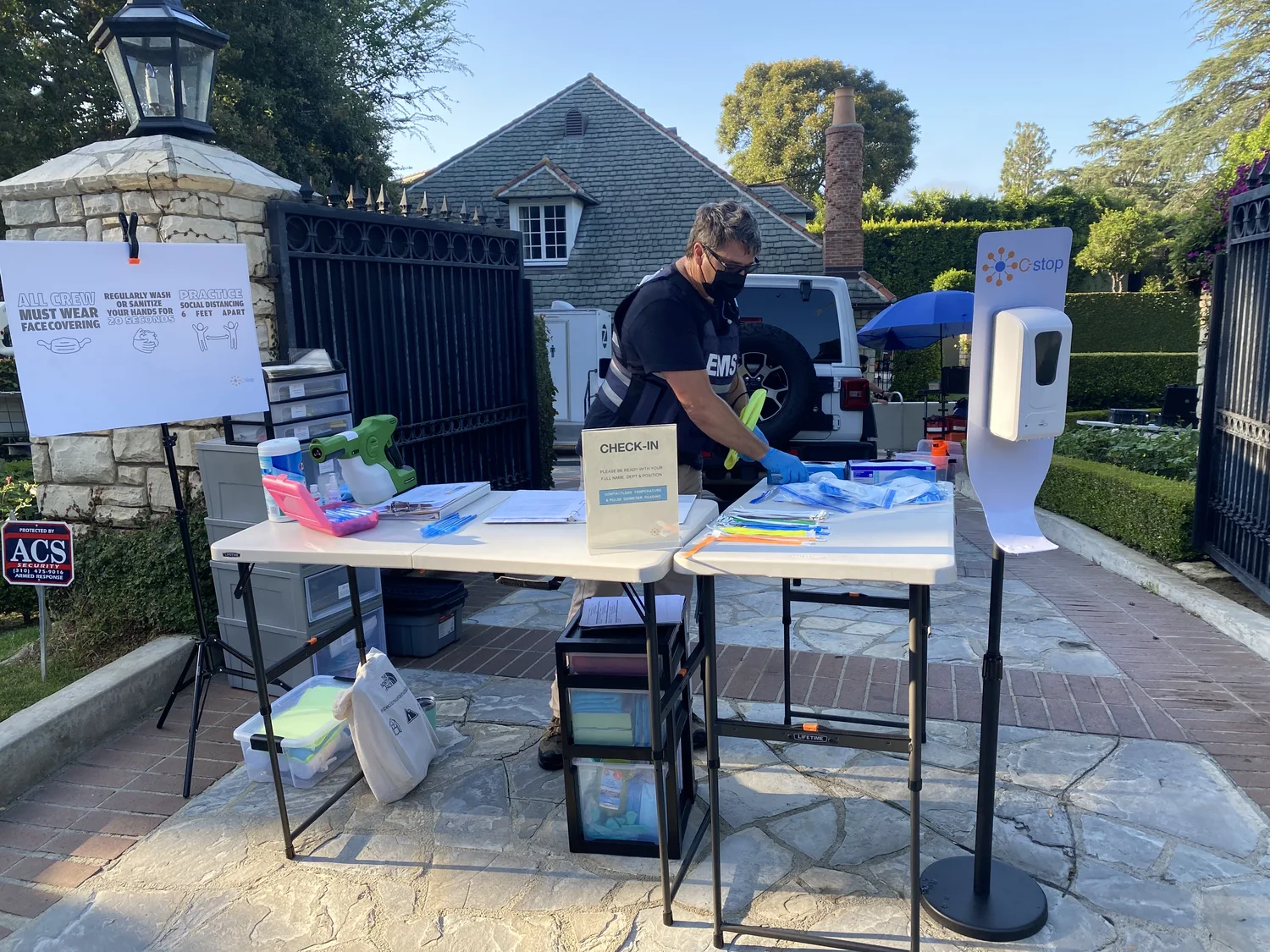
I first leaned into learning nonverbal cues while running my COVID compliance company during the COVID-19 pandemic. My business supported the productions of my TV and video clients. People rarely said what they really felt, but fear, confusion, and frustration showed in their body language, tone, and attitudes. That experience changed how I listen. I pay attention to pauses, eye contact, posture, and shifts in energy. I’m not always good at it, but I think it helps me respond in a way that (hopefully) helps people feel heard. This presence and active engagement can make conversations more effective and often prevent conflict from escalating.
I reflect on how often I have lived these concepts without the words to describe them. In my work in production, I was constantly navigating people, pressure, and competing priorities, often relying on instinct and speed. That environment forced me to develop skills quickly, but it also meant I was reacting more than responding intentionally.
One of my biggest shifts is realizing awareness alone is not enough. I need to practice these skills in real time, especially during tension or conflict. I strive to master this. As I think about mediation, I see how crucial these skills are. I want to help people navigate conflict and unmet needs.
References
American Psychological Association. (2017). What is cognitive behavioral therapy? https://www.apa.org/ptsd-guideline/patients-and-families/cognitive-behavioral
Aronson, E., Wilson, T., Sommers, S., Page-Gould, E., & Lewis, N. (2023). Social psychology (11th Ed). Pearson.
Frankel, D. (Director). (2006). The Devil Wears Prada [Film]. 20th Century Fox.
Lawrence, B., Sudeikis, J., Hunt, B., & Kelly, J. (Executive Producers). (2020). Ted Lasso [TV series].
Meltzoff A. N. (2007). 'Like me': a foundation for social cognition. Developmental science, 10(1), 126–134. https://doi.org/10.1111/j.1467-7687.2007.00574.x
Player, G. (2010). The harder I practice, the luckier I get. Brainy Quote. Retrieved April 25, 2026, from https://www.brainyquote.com/quotes/gary_player_465529
Sacilotto, E., Salvato, G., Villa, F., Salvi, F., & Bottini, G. (2022). Through the looking glass: A scoping review of cinema and video therapy. Frontiers in Psychology, 12, Article 732246. https://doi.org/10.3389/fpsyg.2021.732246