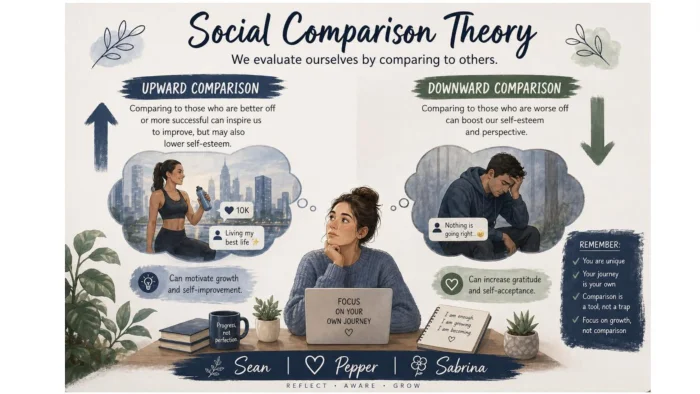
Attitudes and persuasion, conformity, helping behavior, and prejudice are concepts that stood out for me because they explain how strongly people are shaped by social influence, emotions, and the need to belong (Aronson et al., 2023). The more I study social psychology, the more I realize how often these processes happen automatically and without conscious awareness. Through my work in production, mediation training, and growing interest in the psychology of life, I constantly see these concepts play out in real life. In this paper, I apply these topics to my personal and professional experiences while connecting them to film and television examples.
Attitudes and persuasion
Attitudes and persuasion explain how people’s beliefs are often shaped emotionally rather than logically (Aronson et al., 2023). Before learning about persuasion theories, I assumed people mostly changed their opinions through facts and rational discussion. However, social psychology shows how strongly emotions, repetition, fear, and social approval influence attitudes. This immediately made me think about The Social Dilemma (Orlowski, 2020), which demonstrates how social media algorithms influence people’s beliefs and behaviors without them fully realizing it. A documentary that confirmed my suspicions and that I found deeply disturbing.
This topic also made me reflect on communication within my own family. My younger half-sister is seventeen years younger than me and almost never answers phone calls. She mainly communicates through texting or voice dictation. I have always found it bizarre and sometimes annoying because I value direct conversation and hearing someone’s voice. At first, I interpreted her communication style as emotional distance or avoidance. But I guess it might be generational or just how she grew up with our dad and her mom. What feels disconnected to me may feel normal and emotionally safe to her. This topic helped me realize how strongly culture, technology, and generational influences shape communication and behavior.
Conformity
Conformity strongly resonated with me, especially the concept of normative social influence. Normative social influence occurs when people go along with the group not necessarily because they agree, but because they want to fit in or avoid rejection (Aronson et al., 2023). This pressure becomes stronger when belonging feels important or when people feel they are being observed by others.
A great example of this appears in Season 1 of Cheer through the experiences of Jerry Harris and the Navarro College cheerleading team (White & Greenfield, 2020). Jerry constantly pushes through fear, exhaustion, and injuries because he does not want to disappoint his teammates or appear weak. His behavior reflects normative social influence because he publicly conforms to the expectations of the team even when he may privately feel fear or uncertainty.
I witnessed conformity through my years working in production. Production can be highly hierarchical and navigating power dynamics can be tricky. People frequently conform to group expectations or leadership styles to avoid conflict or maintain approval. Looking back, I realize how often people, including me, remained silent even when they/we disagreed because speaking up felt risky. It reminds me of the film The Devil Wears Prada (Frankel, 2006), where employees constantly adapt their behavior, appearance, and communication to fit the expectations surrounding Miranda Priestly. Even when characters feel uncomfortable or emotionally exhausted, they continue conforming because they fear rejection, failure or getting fired. Watching the film through the lens of social psychology makes those dynamics incredibly obvious.
My life experiences taught me the importance of emotional safety and leadership. I have worked under leaders who created fear-based environments and others who encouraged trust and collaboration. As I get older, I have become more aware of making sure I am not simply “one of the herds” by automatically conforming to social pressure or group expectations. Social psychology is helping me recognize how easily people can lose their individual judgment when approval and belonging are involved.
Helping behavior and the bystander effect
Helping behavior and the bystander effect were some of the most emotionally impactful topics for me. I always believed most people would naturally help someone in distress, so watching social experiment videos where people ignored obvious situations requiring help was difficult for me to watch. It surprised me how often people looked away or waited for someone else to intervene. Learning about diffusion of responsibility helped me better understand why this happens (Aronson et al., 2023) but it doesn’t make it easier to accept.
This topic reminded me of The Hunger Games (Ross, 2012), where characters are constantly faced with decisions about whether to help others, protect themselves, or remain passive in dangerous situations. Many characters avoid intervening because fear and self-preservation take priority, while others risk their own safety to protect someone else. The film highlights how stressful environments, social pressure, and uncertainty can strongly influence helping behavior. Watching it through the lens of social psychology made the bystander effect and diffusion of responsibility feel much more realistic and emotionally complex.
Prejudice and stereotypes
Prejudice and stereotypes deepened my understanding of how quickly people form assumptions about others based on group membership, appearance, or identity (Aronson et al., 2023). Before studying this topic, I mostly viewed prejudice as openly disliking another group. I better understand how stereotypes and social identity influence behavior both consciously and unconsciously. I found a lot of the videos in this chapter unwatchable. I actually cried because of the cruelty even though I knew they were actors because this really happens in the world and it is horrifying.
The film Zootopia (Howard & Moore, 2016) immediately came to mind because it demonstrates how stereotypes and bias can become normalized within society. Characters repeatedly judge one another based on assumptions tied to their species rather than seeing individuals for who they actually are. Even well-meaning characters carry unconscious bias without fully recognizing it.
There are different forms of stereotyping and ingroup bias in production environments. Under stress, people often rely on assumptions and labels when interacting with others. I love learning new strategies that reduce prejudice, such as cooperation and shared goals so this reinforced my belief that empathy and meaningful interaction are essential for reducing conflict and increasing understanding.
As I reflect on these concepts, I realize how often social psychology appears in everyday life without people fully recognizing it. I constantly find myself in awe of behavioral phenomena. Whether through communication styles, conformity, helping behavior, or stereotypes, people are constantly shaping and being shaped by the social world around them. My chosen topics reinforce the importance of empathy, emotional intelligence, communication, and critical thinking in personal relationships and professional environments. As I continue pursuing mediation and conflict resolution work, I can already see how understanding these concepts will help me navigate conflict, build trust, and support healthier communication and human connection. References Aronson, E., Wilson, T., Sommers, S., Page-Gould, E., & Lewis, N. (2023). Social psychology (11th Ed). Pearson. Frankel, D. (Director). (2006). The Devil Wears Prada [Film]. 20th Century Fox. Howard, B., & Moore, R. (Directors). (2016). Zootopia [Film]. Walt Disney Pictures. Orlowski, J. (Director). (2020). The Social Dilemma [Film]. Exposure Labs. Ross, G. (Director). (2012). The Hunger Games [Film]. Lionsgate. White, G., & Greenfield, A. (Executive Producers). (2020). Cheer [TV series]. Netflix.
References
Aronson, E., Wilson, T., Sommers, S., Page-Gould, E., & Lewis, N. (2023). Social psychology (11th ed.). Pearson.
Frankel, D. (Director). (2006). The Devil Wears Prada [Film]. 20th Century Fox.
Howard, B., & Moore, R. (Directors). (2016). Zootopia [Film]. Walt Disney Pictures.
Orlowski, J. (Director). (2020). The Social Dilemma [Film]. Exposure Labs.
Ross, G. (Director). (2012). The Hunger Games [Film]. Lionsgate.
White, G., & Greenfield, A. (Executive Producers). (2020). Cheer [TV series]. Netflix.