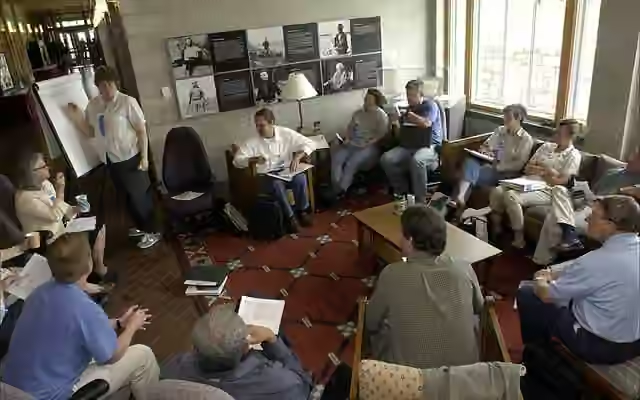
I was never really interested in group therapy, but the more I watch videos of group dynamics, the more I respect their healing power. Group members tend to be super supportive. Being part of a group that meets weekly and hearing from other people with the same lived experiences has been helpful. I would not want to lead a group, but these feelings could change as I learn more and have more exposure to their benefits.
Reading reflection
Chapter 9 p. 349-351, Yalom discusses brief group therapy as a structured, time-limited approach designed to achieve meaningful change within a short period. Unlike open-ended treatment, which allows for long-term personal exploration, brief therapy is goal-oriented, highly focused, and often more directive. Yalom states, "A well-structured brief group can generate a powerful sense of cohesion, focus, and interpersonal learning in a condensed period, proving that meaningful change does not always require years of therapy." This approach resonates deeply with me because, for the longest time, I struggled to understand the traditional therapy model. Individuals can spend years in therapy without ever reaching the core of meaningful behavioral change. It often feels like a never-ending cycle—clients metaphorically open their "trash bin" of past experiences and unpack childhood events that shape their adult emotions and behaviors. Yet, just as they start, the session ends, the bin lid closes, and the next person takes their turn. With such limited progress, it’s no surprise that real change can feel out of reach. Yalom’s approach to brief group therapy offers a structured and time-bound alternative that fosters behavioral transformation within a set timeframe. Lately I have been finding myself wanting to join more groups and I like the idea of a brief, well-structured brief group. CODA meetings were mentioned in class, and I am intrigued by this.
Group reflection
Lorna’s ELG this week was right up my alley. Her questions were about happiness, and I am doing a certification in happiness studies with the best-selling author and Harvard professor, Dr. Tal Ben-Shahar. During our discussion on happiness practices, a common theme emerged: celebrating gratitude and small wins while recognizing that happiness is essential to our overall health. We reminded ourselves to embrace the child within and maintain a sense of wonder. Lorna’s “saloon doors” metaphor captured her mindset of staying open to happiness. We also explored the idea of resilience in the face of setbacks. JF shared a great example—his tire light came on while driving with his family. He pulled out a device to check it, but it unexpectedly caught fire. Instead of letting frustration take over, he reminded himself, “You can’t let the devil take your joy.” Even when things don’t go our way, we can choose to adapt, keep moving forward, and return to a positive mindset. While setbacks can sometimes lead to procrastination, it's all part of the journey. Lorna referenced Night Bird, a singer from AGT who had advanced cancer during her audition, but she said to Simon, “You can’t wait until life isn’t hard anymore, before you decide to be happy.” Her song was called, “It’s okay.” It was very moving.
John’s topic felt like the opposite of Lorna’s -toxic nostalgia, which refers to a longing for the past that has negative consequences, preventing people from fully engaging in the present and making healthy choices. DM described toxic nostalgia as reminiscing about past experiences—whether positive or negative—in ways that hinder future progress. MG provided an example related to motherhood and relationships, illustrating how couples can become stuck in memories of what their relationship used to be. SL highlighted how people in recovery often romanticize past experiences, which can jeopardize their healing process. SL shared insights on trigger avoidance and trigger exposure, two approaches for managing nostalgia-related emotional distress.
We ended on a positive note by reflecting on the benefits of nostalgia, which can serve as a “time machine” to meaningful memories. I shared the joy of adopting Sir Henry Hudson at two months old, while L reminisced about a memorable trip to Disneyland. Even small memories, like a goldfish that lived for five years, reminded us that nostalgia can be a source of comfort and joy when used in a healthy way.
One-on-one reflection
This week’s dyad focused on multiculturalism and different lived experiences. SL and I discussed the effects of childhood assault and how it takes conscious effort to avoid transference, which led to a broader conversation about implicit bias. We explored themes of cultural diversity, power, and privilege, particularly in power dynamics—whether having power over someone or sharing power with them. Growing our capacity for awareness in these areas requires ongoing learning through social media, following diverse creators, reading books, and listening to podcasts. We also reflected on what it might feel like to work with clients whose experiences vastly differ from our (own) and how we can navigate those interactions with sensitivity and awareness. The Wheel of Power & Privilege served as a helpful framework for understanding how different social identities intersect and impact personal and professional relationships.. I would rate myself a 9.
References
Corey, M.S., Corey, G., & Corey, C. (2018). Groups: Process and Practice (10th ed.). Boston, MA: Cengage Learning.
McKay, M., Davis, M., & Fanning, P. (2018). Messages: The communication skills book (4th ed). Oakland, CA: New Harbinger.
Yalom, I. (2020) The theory and practice of group psychotherapy (6th ed). New York, NY: Basic Books.